Understanding Physical Environment, Social, Financial, Organizational, Life Events, Lifestyle, and Physiological Stressors The 7 Types of Stress: A Complete Guide to Identifying, Understanding, and Managing Every Source of Stress in Your Life Stress is not a single experience. The tension you feel when a car cuts you off in traffic is physiologically similar to the dread of an overdue bill — but they arise from completely different sources, affect you in different ways, and require different solutions. That distinction matters more than most stress advice acknowledges. Generic tips like "practice deep breathing" or "exercise more" can help, but they rarely resolve stress at its root. Understanding which category of stress you're dealing with is the first step toward actually doing something about it. This guide walks through all seven clinically recognized categories of stressors, with concrete examples, what the research says about each one, and targeted stra...
How to Start a Digital Reset and Reclaim Your Focus in 2026
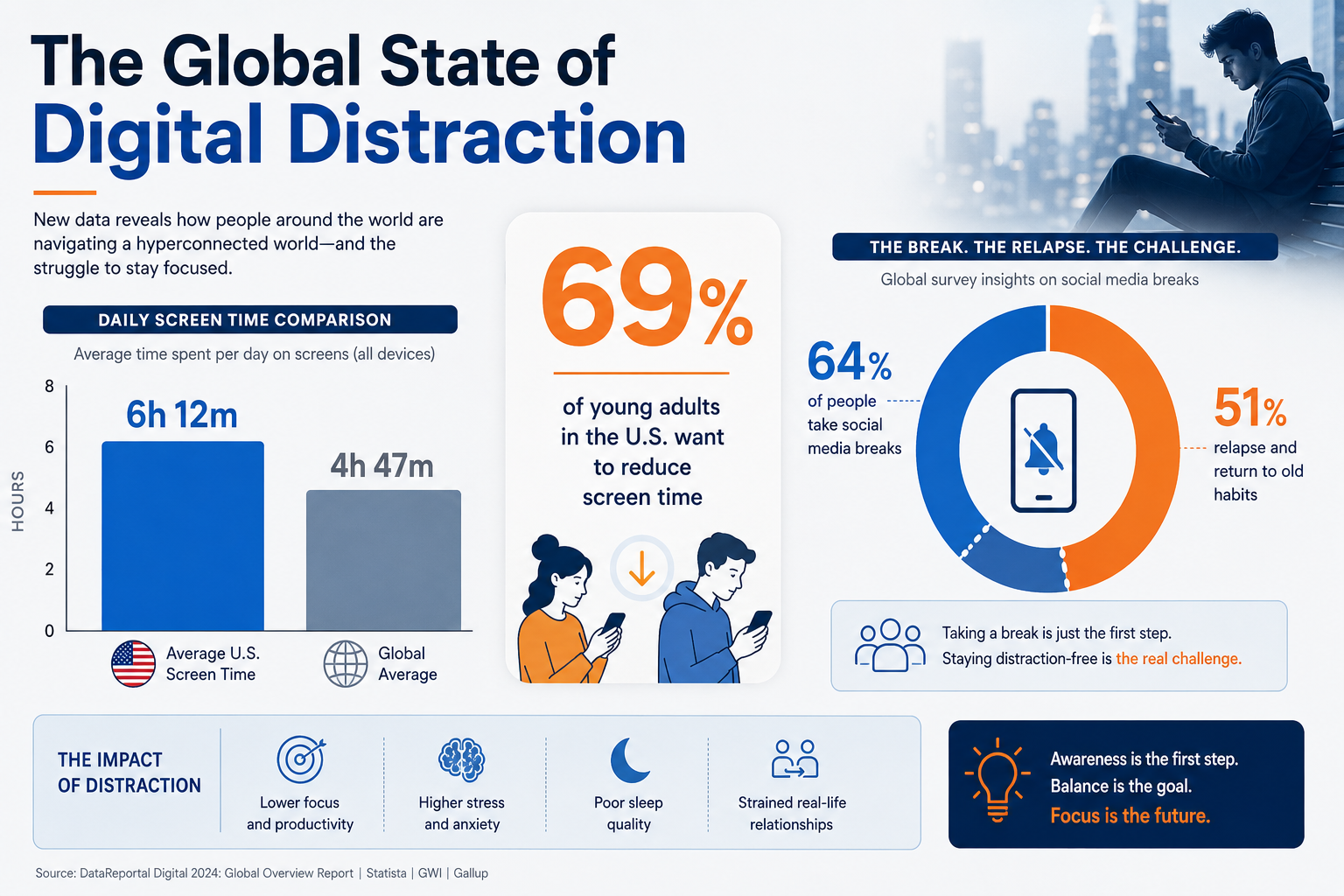
The average person in the United States now spends over six hours a day staring at a screen [2]. That’s more than a third of our waking hours lost to a sea of notifications, emails, and endless scrolling. This constant digital deluge has fractured our attention, making deep, sustained focus an increasingly rare commodity. If you feel like your ability to concentrate is slipping away, you are not alone. A growing movement is underway, with 43% of people reporting they have intentionally cut back on their screen time in the last six months alone [1]. A digital reset is no longer a radical idea; it’s an essential practice for reclaiming your mental clarity.
This guide provides a comprehensive, step-by-step framework to help you disconnect from the noise and reconnect with what matters. We’ll explore the science-backed benefits of a digital detox and give you actionable strategies to build healthier tech habits that last.
Key Takeaways
- The Problem is Pervasive: As of 2026, average U.S. screen time is 6 hours and 12 minutes daily, significantly higher than the global average, and a majority of young adults want to cut back [2].
- Benefits are Tangible: A digital reset can lead to significant improvements in well-being, mental health, and attention. Research shows 91% of participants benefit, with many gaining an average of 20 extra minutes of sleep per night [4].
- Intentional Action is Required: Lasting change comes from a clear plan. This involves defining your purpose, auditing your digital spaces, creating boundaries, and establishing long-term habits to maintain your newfound focus [5, 6].
The Alarming Truth: Why You've Lost Your Focus and Why It Matters
The desire to look away from our screens is growing into a powerful movement. In the United States, an overwhelming 69% of young adults aged 18 to 29 express a desire to spend less time on their devices [2]. This trend is driven heavily by younger demographics, with nearly half of all Millennials (49%) and a significant portion of Gen Z (44%) actively trying to reduce their screen usage [1].
However, intention doesn't always translate to action. While an estimated 80% of smartphone users attempt to create their own rules to limit their digital consumption, very few succeed in the long term [3]. The reasons are complex:
- The Failure of Self-Regulation: Only 12% of users take advantage of the built-in screen-time management tools on their devices [3]. We often know we need to change but fail to use the very tools designed to help us.
- The Relapse Cycle: The pull of digital platforms is strong. About 64% of people who attempt a digital reset do so by taking a break from social media. Unfortunately, over half of them (51%) eventually relapse into their old habits [3].
This cycle of distraction and relapse chips away at our ability to engage in deep work, connect with others, and simply be present. Reclaiming your focus is not just about productivity; it's about improving your overall quality of life.
The Science-Backed Benefits of a Digital Reset
Disconnecting from your devices, even for short periods, can have a profound and measurable impact on your well-being. A study from Georgetown University found that an incredible 91% of participants who reduced their smartphone use reported improvements in at least one major area, including attention, mental health, and overall well-being [4].
The benefits extend beyond just feeling less distracted. Participants in the study also experienced significantly better sleep hygiene, gaining an average of 20 additional minutes of sleep each night [4]. Better sleep, in turn, contributes to improved cognitive function, emotional regulation, and, you guessed it, better focus throughout the day.
Pull Quote: "A digital reset is the first step toward transforming your relationship with technology from one of passive consumption to one of mindful intention."
By consciously choosing when and how you engage with technology, you empower yourself to live a more present, fulfilling, and focused life.
A Practical Guide: How to Start Your Digital Reset and Regain Focus
Ready to take back control? A successful digital reset is not about throwing your phone away. It's about building a sustainable, intentional relationship with technology. Here’s how to get started.
Step 1: Define Your "Why"
Before you delete a single app, take a moment to define your motivation. Why do you want to do this? Do you want to be more present with your family? Do you want to finish that book you started months ago? Do you want to dedicate more time to a hobby?
Experts agree that having a clear "why" is the most critical factor for success [5]. Write your reasons down and place them somewhere visible. This will be your anchor when the temptation to scroll mindlessly strikes.
Step 2: Conduct a Digital Audit and Declutter
Your digital space is like your physical space—clutter creates stress and distraction. It’s time to clean up.
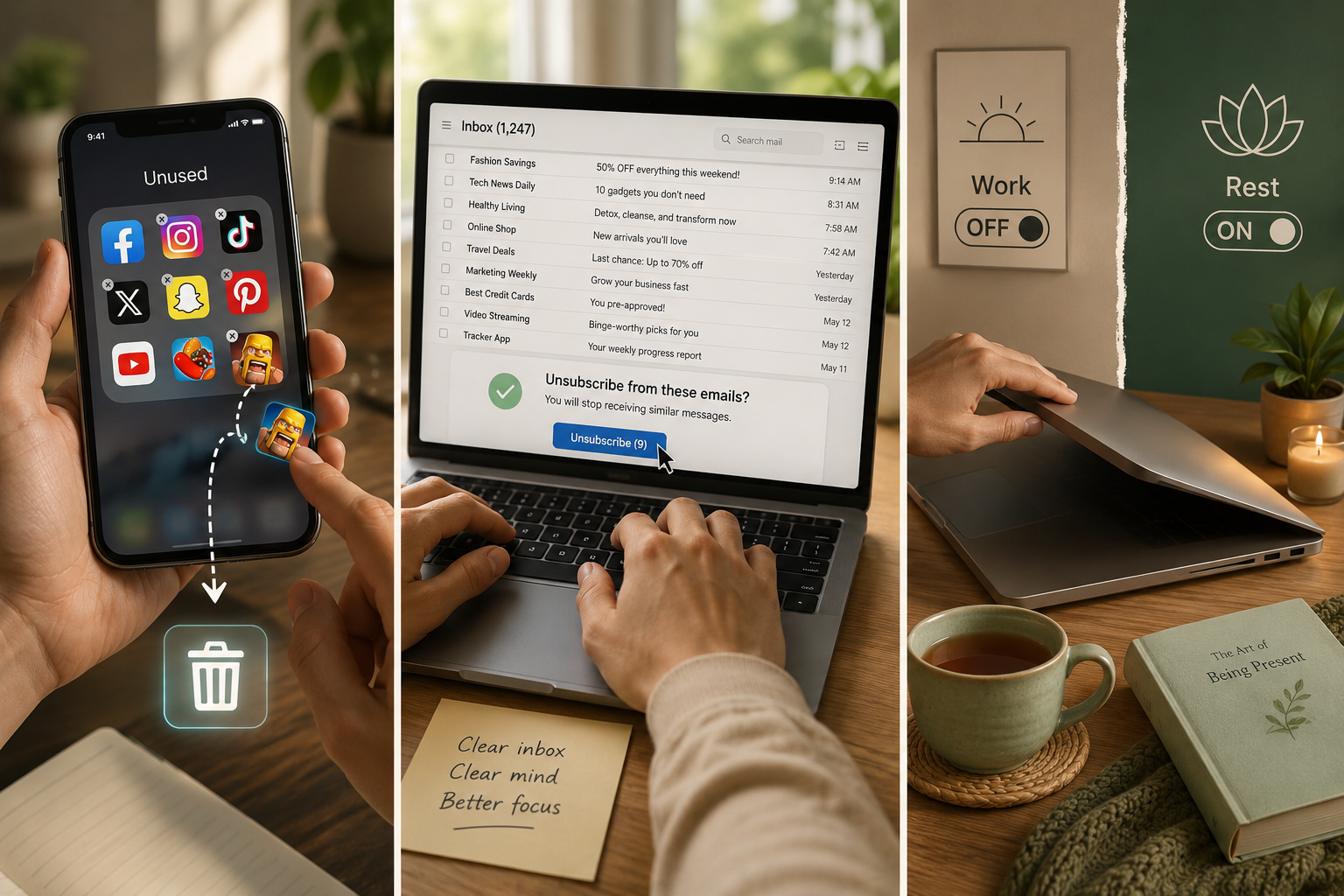
- Delete Unused Apps: Go through your phone and delete any apps you haven't used in the last month. Be ruthless.
- Unsubscribe and Unfollow: Audit your email subscriptions and social media feeds. Unsubscribe from newsletters you never read and unfollow accounts that don't add value or joy to your life [6]. This simple act can dramatically reduce digital noise.
- Organize Your Home Screen: Group essential apps into folders and move distracting apps off your main home screen. Creating this small amount of friction can break the cycle of unconscious tapping.
Step 3: Create Boundaries with Transition Rituals
Create clear lines between your "online" time and "offline" time. One of the most effective ways to do this is by establishing transition rituals. For example, make it a rule to fully close your laptop at the end of the workday [5]. This simple physical act signals to your brain that work is over and it's time to disengage.
Other powerful boundaries include:
- No-phone zones: Designate certain areas of your home, like the dinner table or the bedroom, as tech-free zones.
- Time blocking: Schedule specific times for checking email and social media instead of reacting to notifications all day.
- Use technology to fight technology: Be part of the 12% who successfully use built-in features. Set app time limits and schedule "Downtime" on your devices [3].
Step 4: Plan for Long-Term Success
A digital reset isn’t a one-time fix; it’s the beginning of a new way of interacting with technology. To avoid relapse, you need a long-term strategy.
Productivity experts recommend limiting your goal-setting to a few key categories to avoid feeling overwhelmed [6]. Instead of trying to change everything at once, pick one or two new habits to focus on each month. Maybe the first month is about not bringing your phone to bed. The next might be a "no social media on weekends" rule.
Small, consistent changes are far more effective than drastic, short-lived detoxes.
Conclusion
In 2026, the battle for our attention is more intense than ever. The constant stream of information and notifications is not just a minor annoyance; it's a significant barrier to a focused, intentional life. A digital reset offers a powerful antidote, allowing you to clear the mental clutter, improve your well-being, and reclaim your most valuable asset: your focus.
You don't need to wait for a new year or a vacation to start. Your journey to digital wellness can begin today.
Your Next Step: Pick one strategy from this guide and implement it this week. Start small. Delete three apps you don't use, unsubscribe from five email lists, or leave your phone in another room during dinner tonight. Take that first step and prove to yourself that you are in control.
Comments
Post a Comment
Thanks for your response,May God bless you