Understanding Physical Environment, Social, Financial, Organizational, Life Events, Lifestyle, and Physiological Stressors The 7 Types of Stress: A Complete Guide to Identifying, Understanding, and Managing Every Source of Stress in Your Life Stress is not a single experience. The tension you feel when a car cuts you off in traffic is physiologically similar to the dread of an overdue bill — but they arise from completely different sources, affect you in different ways, and require different solutions. That distinction matters more than most stress advice acknowledges. Generic tips like "practice deep breathing" or "exercise more" can help, but they rarely resolve stress at its root. Understanding which category of stress you're dealing with is the first step toward actually doing something about it. This guide walks through all seven clinically recognized categories of stressors, with concrete examples, what the research says about each one, and targeted stra...
Worried About Pancreatic Cancer Symptoms? A Guide to Managing Health Anxiety

Last updated: May 28, 2026
A persistent backache and a few pounds of unexplained weight loss. For many, it’s a sign of stress or a poor diet. But for a growing number of people, it’s a trigger for a deep-seated fear about their health, specifically concerning symptoms of pancreatic cancer and other cancers. This anxiety stems from the notoriously vague nature of the disease's early warning signs, which often mimic dozens of less serious conditions.
Managing this health anxiety is about taking control, not ignoring the signs. It involves understanding the actual symptoms, recognizing the patterns of anxiety, and creating a clear, logical plan to address your health concerns with a medical professional. This guide provides actionable steps to navigate the worry and focus on what truly matters: your well-being.
Key Takeaways
- Vague Symptoms Drive Anxiety: The primary reason for anxiety around pancreatic cancer is that its symptoms—like back pain, weight loss, and digestive issues—are non-specific and overlap with many common, benign conditions [2].
- Knowledge is Power (When Used Correctly): Understanding the specific cluster of symptoms associated with pancreatic cancers can help differentiate between general worry and a legitimate health concern that needs a doctor's attention.
- Anxiety Can Be a Symptom: In some cases, the onset of depression or anxiety can be an early biological symptom of the disease itself, not just a psychological reaction to it [1].
- "Dr. Google" Is Not Your Friend: Compulsive online searching often worsens health anxiety. It's crucial to limit research and rely on professional medical advice instead.
- Action Alleviates Anxiety: The most effective way to manage fear is by taking concrete steps, such as keeping a detailed symptom journal and scheduling a doctor's appointment.
- Professional Help is Available: Cognitive Behavioral Therapy (CBT) and other forms of counseling are highly effective for managing health anxiety.
Why Do Pancreatic Cancer Symptoms Cause So Much Anxiety?
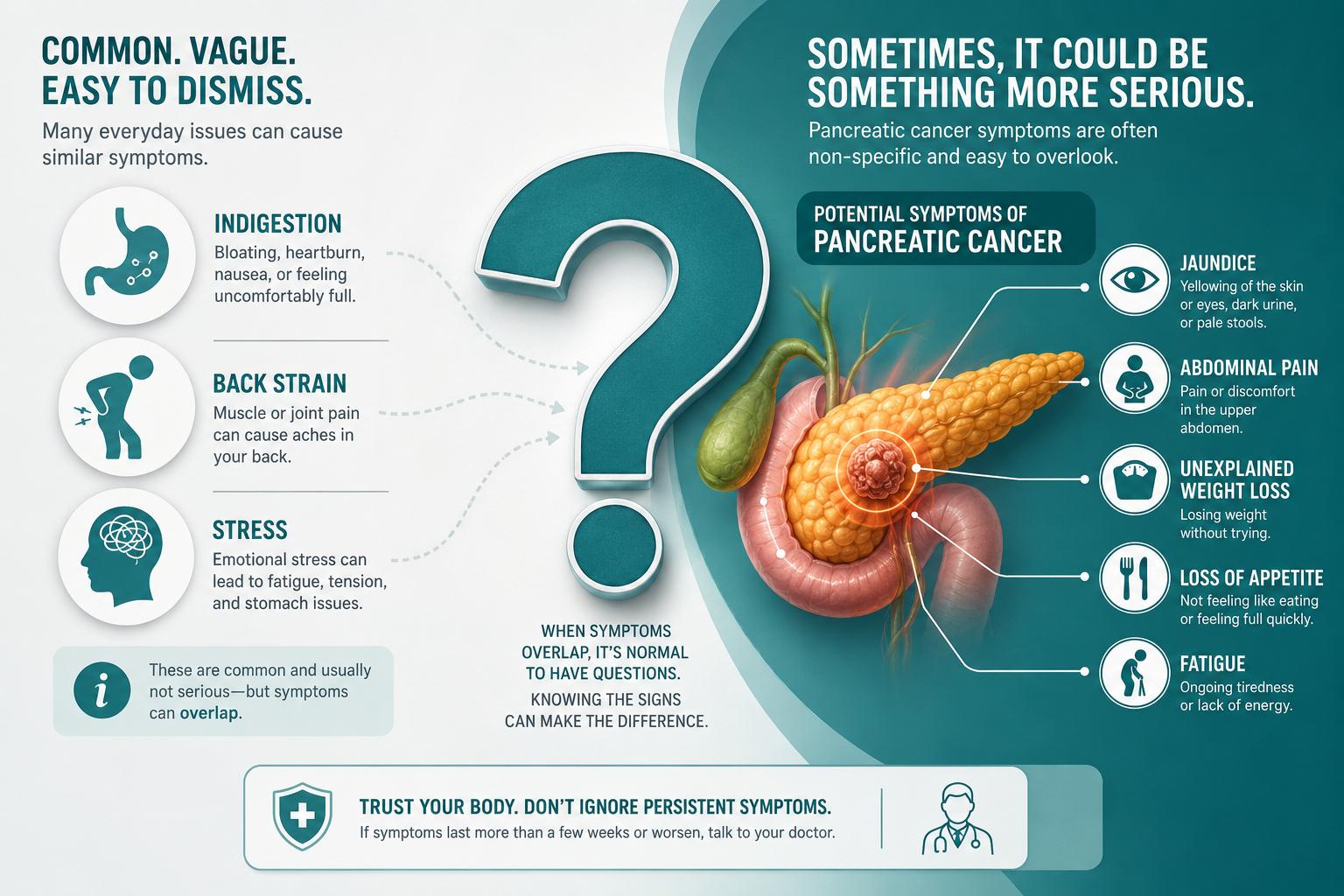
The anxiety surrounding potential pancreatic cancer symptoms is high because the early signs are notoriously subtle and easily mistaken for other, more common health problems. Symptoms like upper abdominal pain that radiates to the back, loss of appetite, or unintentional weight loss are non-specific, meaning they can be caused by a wide range of conditions, from simple indigestion to gallbladder issues [2].
This ambiguity creates a perfect storm for health anxiety. When you experience a common ache or pain and turn to the internet, you may find that your symptom is listed alongside serious diseases like pancreatic cancer. This can trigger a cycle of worry, obsessive symptom checking, and escalating fear. The mind-gut connection also plays a role; stress and anxiety can create very real physical gastrointestinal symptoms, further blurring the lines between a worried mind and a genuine health concern.
Common Mistake: Assuming the Worst-Case Scenario
A frequent error is immediately jumping to the most frightening conclusion. A person experiencing bloating and abdominal discomfort for a few days might convince themselves it's a sign of pancreatic cancer, overlooking more probable causes like dietary changes, stress, or irritable bowel syndrome (IBS). It's vital to consider the likelihood and context of symptoms before letting anxiety take over.
Understanding the Real Symptoms of Pancreatic Cancer
To manage anxiety effectively, it's essential to understand the actual combination of symptoms that are most concerning for pancreatic cancers. While these can vary, a doctor is typically looking for a specific pattern of persistent and unexplained signs [2].
The primary symptoms of pancreatic cancer include:
- Jaundice (Yellowing of the Skin and Eyes): This is often one of the first and most specific signs, caused by a tumor blocking the bile duct. It may also be accompanied by dark urine, pale stools, and itchy skin [2].
- Abdominal and/or Back Pain: A dull ache in the upper abdomen that may radiate to the back is common. This pain is often persistent and can worsen after eating or when lying down.
- Unexplained Weight Loss and Loss of Appetite: Losing a significant amount of weight without trying is a key red flag for many cancers, including pancreatic cancer.
- Nausea and Vomiting: A tumor pressing on the stomach can cause feelings of sickness.
- Recent-Onset Diabetes: In some cases, pancreatic cancer can destroy the cells that make insulin, leading to a sudden diagnosis of diabetes, especially in individuals over 50 with a normal BMI.
- Changes in Stools: Stools may become pale, greasy, and float (a condition called steatorrhea) due to the pancreas not releasing enough enzymes to digest fat.
Decision Rule: If you are experiencing a combination of these symptoms—especially jaundice or significant, unintentional weight loss—that persists for more than a couple of weeks, it is crucial to see a doctor for a proper evaluation.
The Link Between Depression, Anxiety, and Pancreatic Cancers
Interestingly, the connection between mental health and pancreatic cancer may be more than just a reaction to a scary diagnosis. Clinical research has shown that depression and anxiety can sometimes be the first symptoms of the disease, appearing months before physical signs like pain or jaundice manifest [1].
This phenomenon is believed to be biological, not just psychological. Tumors in the pancreas can secrete proteins that disrupt the body's normal hormonal and neurological functions, potentially leading to mood changes [1]. This adds a layer of complexity to the issue of health anxiety.
Edge Case: Distinguishing Reactive Anxiety from Symptomatic Anxiety
It's important to try and differentiate between two scenarios:
- Reactive Anxiety: Feeling anxious because you have read about pancreatic cancer symptoms and are worried you might have them. This is the most common form of health anxiety.
- Symptomatic Anxiety: Experiencing a sudden, unexplained onset of severe anxiety or depression with no clear external cause, which could potentially be an early biological sign of the disease [1].
If you have a new and profound change in your mental health alongside vague physical symptoms, it is especially important to mention this to your doctor, as it can be a key piece of the diagnostic puzzle.

Practical Strategies to Manage Your Anxiety Now
Feeling worried about your health is normal, but letting that worry spiral out of control is detrimental. The key is to channel that energy into productive actions that give you a sense of control.
Here are concrete steps you can take to manage your anxiety while addressing your health concerns responsibly:
Logically Limit "Dr. Google": Compulsive online searching is like pouring gasoline on the fire of health anxiety. Set strict boundaries.
- Action Step: Give yourself a 15-minute time limit for research from reputable sources only (like the Mayo Clinic or the National Cancer Institute). Then, close the browser and move on. Do not fall into a multi-hour rabbit hole of forums and blogs.
Create a Factual Symptom Journal: Anxiety deals in vague fears, while doctors deal in data. A symptom journal replaces fear with facts.
- Action Step: For two weeks, track your symptoms. Note the time of day, severity (on a scale of 1-10), what you were doing, what you ate, and any other relevant factors. This provides a clear, objective record to share with your doctor.
Practice Grounding Techniques: When you feel a wave of panic, grounding exercises can pull you out of the anxious thought loop and back into the present moment.
- Action Step: Try the 5-4-3-2-1 Method:
- 5: Name five things you can see.
- 4: Name four things you can feel (your feet on the floor, the fabric of your shirt).
- 3: Name three things you can hear.
- 2: Name two things you can smell.
- 1: Name one thing you can taste.
- Action Step: Try the 5-4-3-2-1 Method:
Focus on What You Can Control: You can't control whether or not you have a specific illness, but you can control your lifestyle choices, which directly impact your overall health and well-being.
- Action Step: Dedicate time each day to healthy habits: a 20-minute walk, preparing a nutritious meal, or practicing a relaxing hobby. These actions empower you and can help reduce physical symptoms caused by stress.
Schedule a Doctor's Appointment: This is the most important step. Procrastinating due to fear only prolongs the anxiety. Getting a professional opinion is the only way to get real answers.
When and How Should You Talk to a Doctor?
You should schedule an appointment with your primary care physician if you have any of the key symptoms of pancreatic cancer—such as jaundice, unexplained weight loss, or persistent abdominal/back pain—that last for more than two weeks. Don't delay. Early detection of all cancers is critical.
To make your appointment as productive as possible, go in prepared. This will help you get the most out of your time and ensure your concerns are heard.
Your Appointment Checklist:
- ✅ Bring Your Symptom Journal: Show your doctor the factual record you've been keeping.
- ✅ List Your Questions: Write down your questions beforehand so you don't forget them. Examples include:
- "Based on my symptoms, what conditions are most likely?"
- "What diagnostic tests do you recommend we start with?"
- "Could my symptoms be related to stress or anxiety?"
- "When should I follow up with you?"
- ✅ Share Your Health History: Be prepared to discuss your personal and family medical history, including any history of cancer, pancreatitis, or diabetes.
- ✅ Be Honest About Your Anxiety: It's okay to say, "I've been very anxious about these symptoms, and I'm specifically worried about pancreatic cancer." This gives your doctor important context about your emotional state and helps them address your fears directly.
Conclusion
Worrying about symptoms that could be linked to pancreatic cancer is a heavy burden, largely because of the vague and common nature of its early signs. However, allowing this anxiety to dominate your life is not a solution. The path forward is one of proactive, rational action.
By understanding the specific symptoms to watch for [2], distinguishing between generalized anxiety and legitimate health concerns, and using practical tools to manage your fear, you can regain a sense of control. Keep a factual log, limit your online searches, and focus on healthy habits. Most importantly, have an open and honest conversation with your doctor. Taking these steps is the most powerful way to care for both your physical and mental health.
FAQ
Can stress cause symptoms that mimic pancreatic cancer?
Yes, absolutely. Chronic stress and anxiety can cause a wide range of gastrointestinal issues, including abdominal pain, bloating, changes in appetite, and even back pain due to muscle tension. This is a primary reason why these symptoms can be so confusing.
How common are these symptoms in other, less serious conditions?
Extremely common. Symptoms like abdominal pain, back pain, and weight changes are associated with dozens of conditions such as irritable bowel syndrome (IBS), gastritis, acid reflux, gallstones, and pancreatitis, making them very poor standalone indicators of cancer.
What is the first test a doctor will likely perform?
A doctor will typically start with a physical exam and blood tests. If they suspect an issue with the pancreas or other abdominal organs, they will likely order imaging tests, such as an ultrasound, CT scan, or MRI, to get a clear picture of the area.
Is there a routine screening test for pancreatic cancer?
Currently, there is no standard screening test for pancreatic cancer for the general population. Screening is typically only recommended for individuals at very high risk, such as those with a strong family history of the disease or certain genetic syndromes.
How can I support a loved one with health anxiety about cancer?
Listen to their fears without judgment, but gently encourage them to take action by seeing a doctor. Avoid offering reassurance like "I'm sure it's nothing," as this can be dismissive. Instead, offer practical support, like helping them book an appointment or going with them.
At what age are pancreatic cancer symptoms more concerning?
The risk of pancreatic cancer increases significantly with age, with the vast majority of cases occurring in people over the age of 60. While it can occur in younger people, symptoms like new-onset diabetes or unexplained weight loss are taken more seriously in an older individual.
Comments
Post a Comment
Thanks for your response,May God bless you